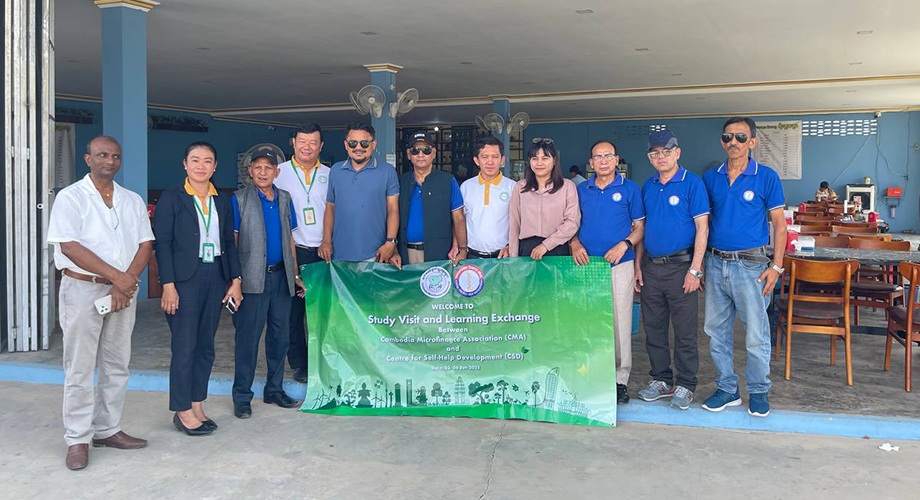
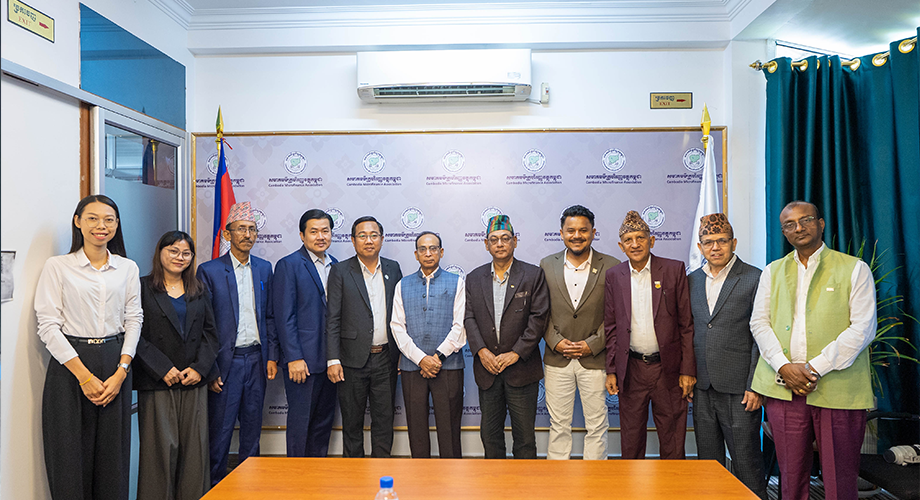
The Cambodia Microfinance Association (CMA) recently hosted seven Nepalese delegates from the Centre for Self-help Development (CSD Nepal) and its member organizations. The visit aimed to help participants learn about the successes and challenges of Cambodia’s microfinance both at sectoral and operation levels.
CSD Nepal, an apex-level organization that serves the microfinance sector by focusing its activities as a national-level training and research institute for microfinance and cooperatives, brought its members— Sahara Nepal SACCOS, Chameli Bachat Tatha Rin Sahakari Sanstha Ltd., and Swabalamban Laghubitta Bittiya Sanstha Ltd.—to Cambodia. During their six-day visit, the delegates sought to learn about Cambodia’s microfinance landscape, exchange knowledge, and visit significant cultural and historical sites.
During the visit, CMA’s senior management team presented the delegates the microfinance sector history, insights, self-regulations such as Lending Guidelines, Standard Loan Contract, Reponsible Lending Certification program, CMA Weekly Financial Literacy campaigns and many sector efforts including establishment of the Financial Consumer Centre (FCC) to protect client and other campaigns to raise awareness on financial literacy among the BFIs’ clients and the public.
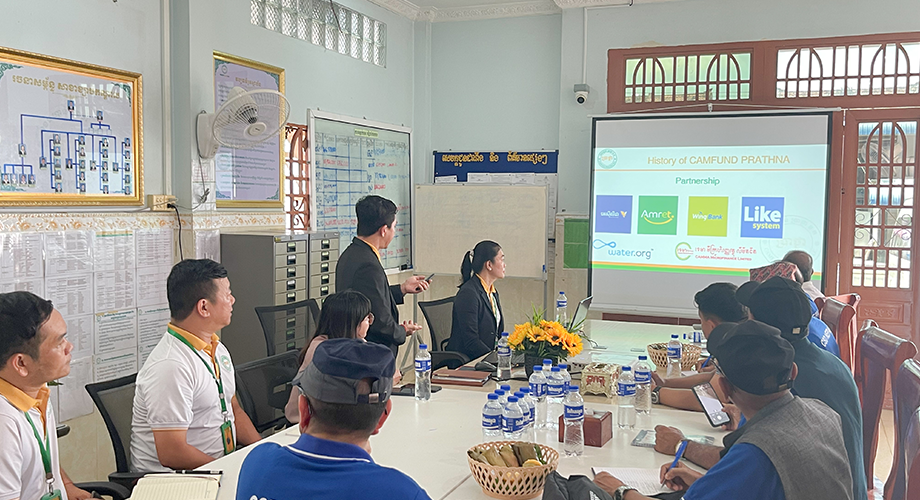
The program also featured insightful presentations delivered by experienced practitioners from member institutions, AMK, Kroursa Ennatean and CAMFUND Prathna. The presenters provided an overview of their organizations and shared details about products designed to support MSME lending.
The presentations covered a range of critical topics shaping Cambodia’s microfinance sector, such as MSME and agricultural lending models, innovative WASH Loan Credit initiatives, and the sector’s self-regulation framework, among others. Presenters also shared practical experiences and lessons learned, illustrating how these approaches have strengthened financial inclusion and supported economic development in rural and underserved communities.
As part of the program, the delegation also visited an Agricultural Cooperative in Siem Reap, where discussions focused on the cooperative’s structure, membership management challenges, and the competitive agricultural market. The cooperative leaders shared insights on loan management, cash flow planning, and the policies governing membership, providing delegates with a deeper understanding of cooperative operations in Cambodia.
Mr. Bechan Giri, Executive Chief of CSD Nepal, expressed his sincere thanks to CMA and its management and members for arranging the tour for his delegates, and community agriculture cooperatives for sharing their experiences and practices, allowing them to delve deeply into the sector.
“CSD will promulgate the best practices of microfinance of Cambodia through organizing training programs for the employees of MFIs”, said Mr. Bechan Giri.
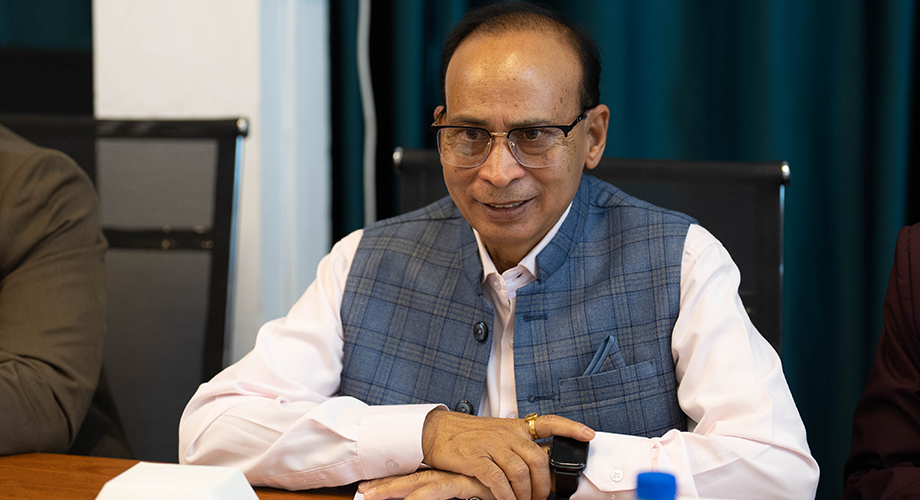
Over several decades, Cambodia's microfinance sector has experienced remarkable growth and has been widely recognized for its role in promoting financial inclusion and contributing to economic development, particularly in rural areas where access to traditional banking services is limited. However, its success has recently been tempered by challenges, including the fallout from the pandemic, ongoing geopolitical conflicts, and issues surrounding responsible lending practices.
During his visit to Cambodia, Dr. Kamaleshwar Bhat, Agri Business Unit Head of Sahara Nepal SACCOS, found the experience "enriching and inspiring," noting he felt "warmly welcomed." He emphasized the significant evolution of Cambodia's microfinance sector, particularly its strong commitment to customer protection and responsible lending.
“Cambodia’s self-regulation practices are very impressive and offer a valuable model for other countries, including Nepal. The Standard Loan Contract and Lending Guidelines are practical tools that help ensure responsible lending while protecting both clients and institutions. The collaborative role played by CMA in developing and enforcing these standards is something we can definitely learn from and possibly replicate in our context”, he added.
CMA also took the delegates on tours to landmark places such as the currency museum, SOSOROR, where they learned about the historical evolution of money and Cambodian culture. They also visited the iconic Angkor Wat, the biggest religious temple, to experience local culture and cuisine, took bus tour, did shopping and toured the pub street in Siem Reap city.

